| Citation: | Zhihao Xie, Yingzhao Fan, Yanqun Huang, Longsheng Wang, Zhiyong Zhu, Jun Li, Xin Ran, Kelu Ni, Guanben Du, Long Yang. Water-triggered adaptive polyvinyl alcohol-polysaccharide supramolecular films with switchable structural and adhesive functions[J]. Journal of Bioresources and Bioproducts, 2026, 11(4): 100280. doi: 10.1016/j.jobab.2026.100280

|
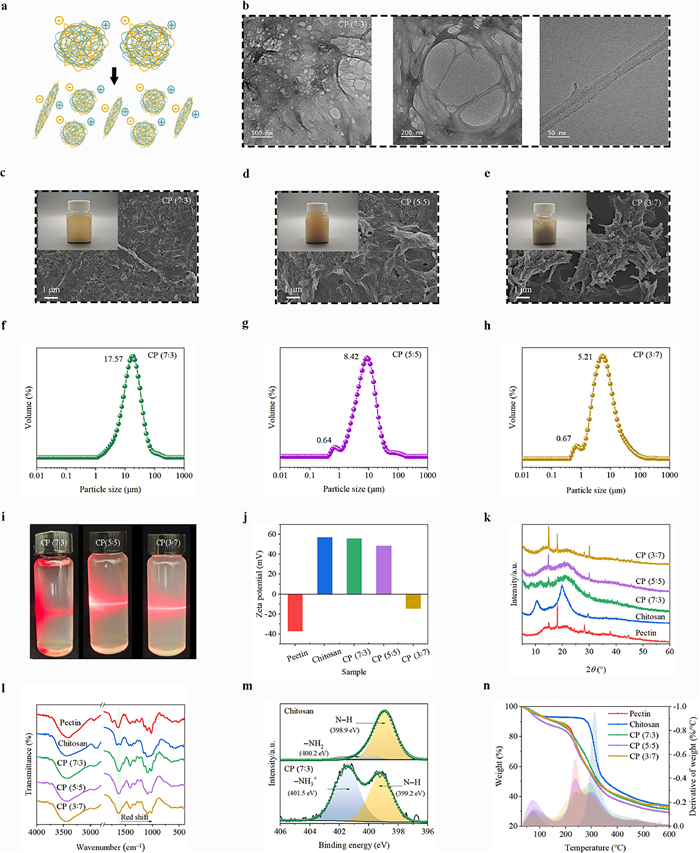
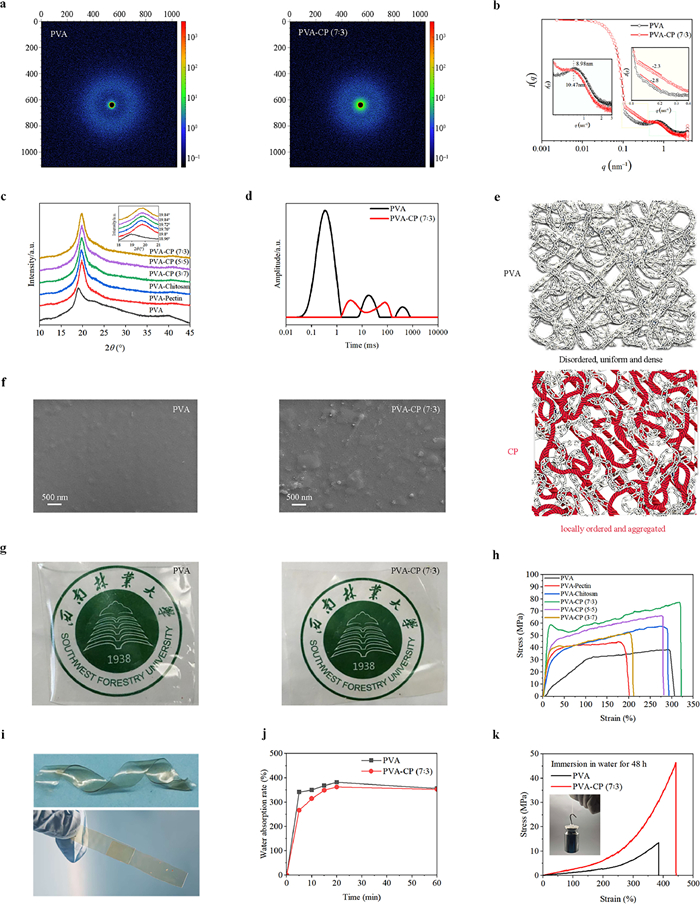
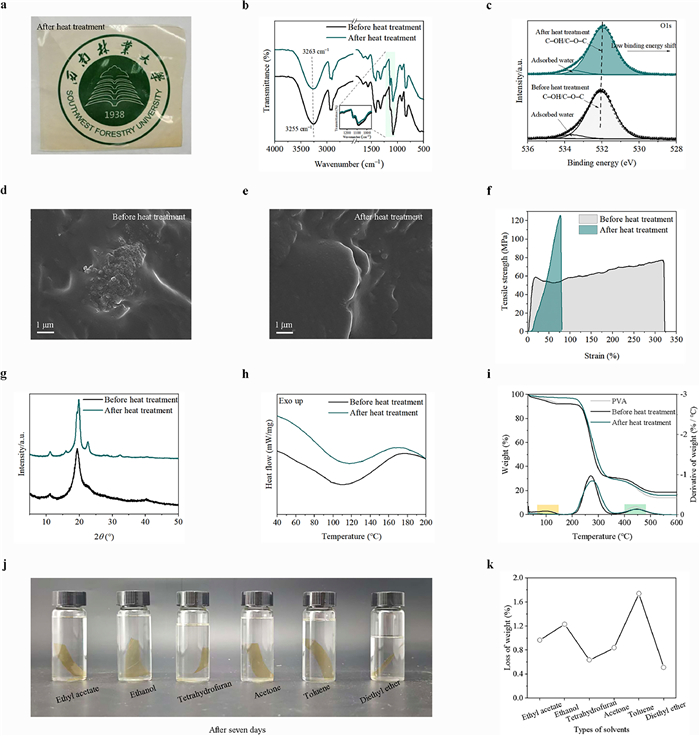
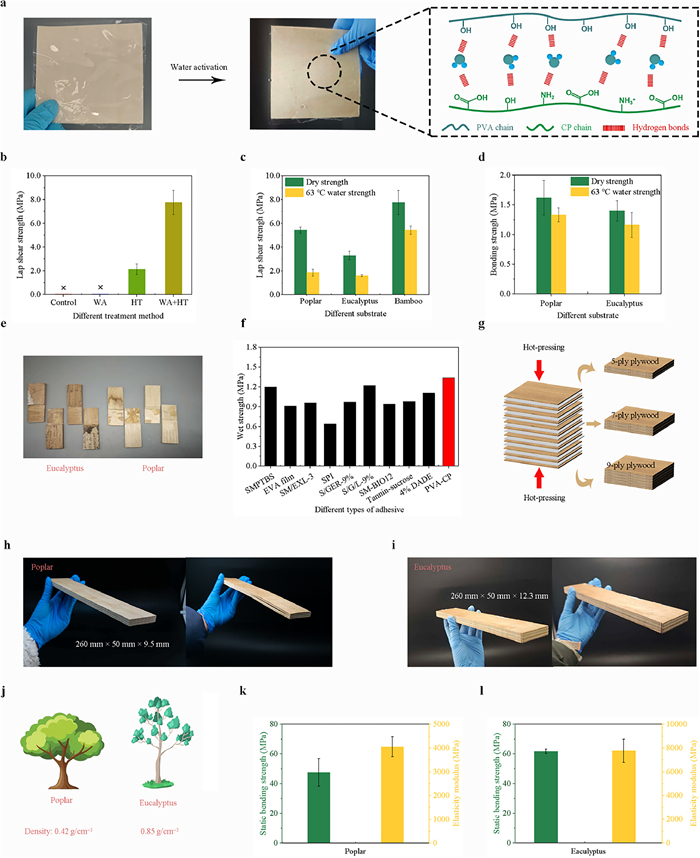
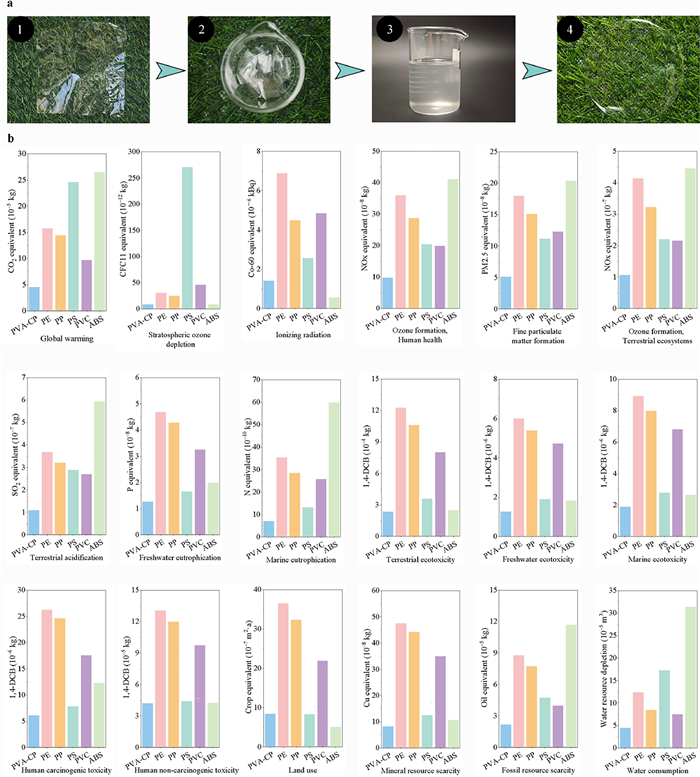
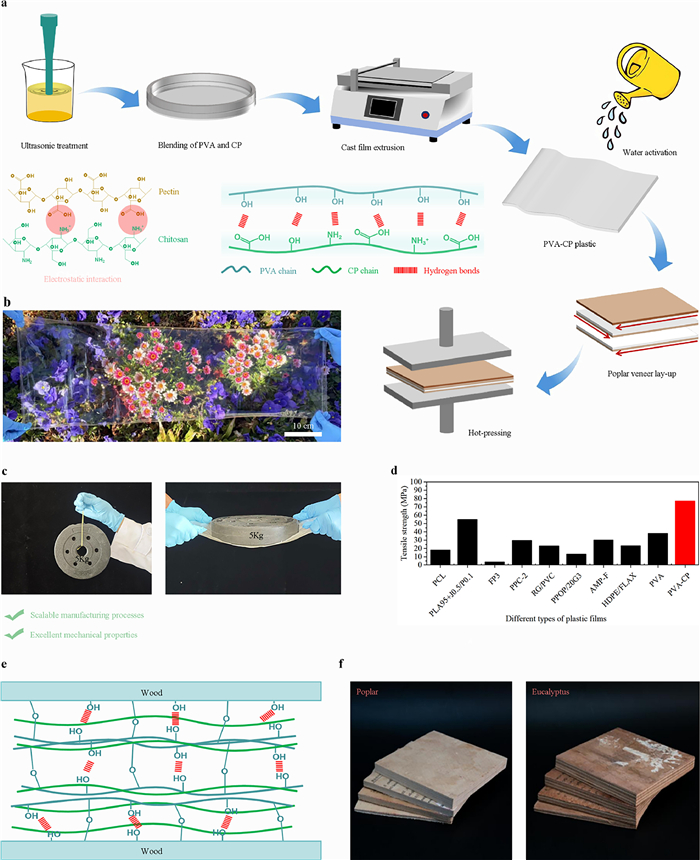
Polyvinyl alcohol (PVA) based films experience significant degradation in mechanical properties under high humidity conditions. This study employed ultrasonic-assisted assembly technology, utilizing the electrostatic interaction between chitosan and pectin to prepare a hybrid polysaccharide polymer (CP). Subsequently, it was blended with PVA to develop a PVA-CP supramolecular film which exhibited both water-responsive and adhesive properties. Benefiting from the reinforcement of PVA crystalline domains by a locally ordered network structure, the PVA-CP (7:3) film maintained a tensile strength of 46 MPa after 48 h of water immersion. It is noteworthy that water-responsive adaptive PVA-CP films can be transformed from bioplastics into high-performance adhesives through water activation and hot-pressing. When used to bond poplar and eucalyptus veneers in plywood production, its performance surpasses the requirements for Class Ⅱ panels of plywood. Furthermore, this film demonstrated significant application potential in multilayer plywood and exhibited an overall lower environmental footprint and cost compared to conventional petroleum-based films. This design strategy broadens multifunctional application prospects for eco-friendly, high-performance and recyclable bioplastic films. The core advantages of the films are water-responsive adaptability and bonding properties.

|
Ansari, J.R., Park, K., Sadeghi, K., Seo, J., 2025. Preparation of MoS2 modified with carbon quantum dots and its application to extremely high oxygen-barrier nanocomposite films for packaging. Food Packag. Shelf Life 49, 101504. doi: 10.1016/j.fpsl.2025.101504
|
|
Babiker, O., Chen, J., Fan, Y.W., Cheng, H., Ye, K., Wu, Z.S., Hassan, A., Wang, D.L., Chen, W., 2025. Failure mechanism of iodine-doped poly(vinyl alcohol) polarizer under high temperature and high humidity conditions. ACS Appl. Polym. Mater. 7, 15354–15364. doi: 10.1021/acsapm.5c02936
|
|
Bae, H., Shin, H.H., Ryu, J.H., 2024. Bio-inspired chitosan/polyvinyl alcohol/tannic acid hydrogels as plant grafting wood adhesives. APL Mater. 12, 111110. doi: 10.1063/5.0242425
|
|
Bao, M., Mu, H.L., Niu, B., Liu, R.L., Chen, H.Z., Chen, H.J., Wang, L.S., Han, Y.C., Wang, G.N., Gao, H.Y., 2025. High UV-shielding polyvinyl alcohol/chitosan-based transparent bioplastic film for food preservation. Food Packag. Shelf Life 47, 101421. doi: 10.1016/j.fpsl.2024.101421
|
|
Chetouani, A., Follain, N., Marais, S., Rihouey, C., Elkolli, M., Bounekhel, M., Benachour, D., Le Cerf, D., 2017. Physicochemical properties and biological activities of novel blend films using oxidized pectin/chitosan. Int. J. Biol. Macromol. 97, 348–356. doi: 10.1016/j.ijbiomac.2017.01.018
|
|
Dhawale, P., Gadhave, S., Gadhave, R.V., 2024. Boric acid-crosslinked liquid glucose–polyvinyl alcohol blend-based wood adhesive. Polym. Bull. 81, 10859–10883. doi: 10.1007/s00289-024-05219-8
|
|
Du, B., Jeepipalli, S.P.K., Xu, B.J., 2022. Critical review on alterations in physiochemical properties and molecular structure of natural polysaccharides upon ultrasonication. Ultrason. Sonochem. 90, 106170. doi: 10.1016/j.ultsonch.2022.106170
|
|
Fang, X., Qing, Y.N., Lou, Y., Gao, X., Wang, H., Wang, X.Y., Li, Y.X., Qin, Y.G., Sun, J.Q., 2022. Degradable, recyclable, water-resistant, and eco-friendly poly(vinyl alcohol)-based supramolecular plastics. ACS Mater. Lett. 4, 1132–1138. doi: 10.1021/acsmaterialslett.2c00283
|
|
Haque, A.N.M.A., Naebe, M., 2021. Flexible water-resistant semi-transparent cotton gin trash/poly (vinyl alcohol) bio-plastic for packaging application: effect of plasticisers on physicochemical properties. J. Clean. Prod. 303, 126983. doi: 10.1016/j.jclepro.2021.126983
|
|
Jiang, Y.Y., Ju, T., Liu, L.X., Li, H.Y., Zhang, Y., Wang, N., Lu, Z.T., Wei, M., Min, D.X., Xie, Y.J., Li, J., Wang, Y.G., Xiao, S.L., 2025. Bonding of wood with high strength and excellent water resistant cellulose colloidal adhesives. Chem. Eng. J. 512, 162668. doi: 10.1016/j.cej.2025.162668
|
|
Khan, W.S., Asmatulu, R., Davuluri, S., Dandin, V.K., 2014. Improving the economic values of the recycled plastics using nanotechnology associated studies. J. Mater. Sci. Technol. 30, 854–859. doi: 10.1016/j.jmst.2014.07.006
|
|
Lamaming, J., Heng, N.B., Owodunni, A.A., Lamaming, S.Z., Khadir, N.K.A., Hashim, R., Sulaiman, O., Mohamad Kassim, M.H., Hussin, M.H., Bustami, Y., Amini, M.H.M., Hiziroglu, S., 2020. Characterization of rubberwood particleboard made using carboxymethyl starch mixed with polyvinyl alcohol as adhesive. Compos. B Eng. 183, 107731. doi: 10.1016/j.compositesb.2019.107731
|
|
Lau, W.W.Y., Shiran, Y., Bailey, R.M., Cook, E., Stuchtey, M.R., Koskella, J., Velis, C.A., Godfrey, L., Boucher, J., Murphy, M.B., Thompson, R.C., Jankowska, E., Castillo Castillo, A., Pilditch, T.D., Dixon, B., Koerselman, L., Kosior, E., Favoino, E., Gutberlet, J., Baulch, S., Atreya, M.E., Fischer, D., He, K.K., Petit, M.M., Sumaila, U.R., Neil, E., Bernhofen, M.V., Lawrence, K., Palardy, J.E., 2020. Evaluating scenarios toward zero plastic pollution. Science 369, 1455–1461. doi: 10.1126/science.aba9475
|
|
Li, Q., Ren, X.H., Xu, W., Zhang, H.Y., Wang, J., Han, S.H., Sun, G.H., 2025. Ultrasound-assisted solvent-induced morphological alteration: a straightforward strategy for broadband sound absorption in polyimide foam. ACS Appl. Polym. Mater. 7, 15755–15767. doi: 10.1021/acsapm.5c03693
|
|
Li, X.Y., Guo, M., Bandyopadhyay, P., Lan, Q., Xie, H.Q., Liu, G.Y., Liu, X.D., Cheng, X.F., Kim, N.H., Lee, J.H., 2021a. Two-dimensional materials modified layered double hydroxides: a series of fillers for improving gas barrier and permselectivity of poly(vinyl alcohol). Compos. B Eng. 207, 108568. doi: 10.1016/j.compositesb.2020.108568
|
|
Li, Y.X., Li, S.H., Sun, J.Q., 2021b. Degradable poly(vinyl alcohol)-based supramolecular plastics with high mechanical strength in a watery environment. Adv. Mater. 33, 2007371. doi: 10.1002/adma.202007371
|
|
Liu, L.J., Chang, D., Gao, C., 2024a. A review of multifunctional nanocomposite fibers: design, preparation and applications. Adv. Fiber Mater. 6, 68–105. doi: 10.1007/s42765-023-00340-1
|
|
Liu, L.X., Wei, M., Li, H.Y., Chen, Y.T., Jiang, Y.Y., Ju, T., Lu, Z.T., Mu, G.Q., Cai, L.J., Min, D.X., Xie, Y.J., Li, J., Xiao, S.L., 2024b. Polyvinyl alcohol solvent-free adhesives for biomass bonding via rapid water activation and heat treatment. Green Chem. 26, 11873–11884. doi: 10.1039/d4gc03386h
|
|
Liu, T.T., Yang, Y.F., Yan, L., Lin, B.Y., Dai, L., Huang, Z.H., Si, C.L., 2024c. Custom-designed polyphenol lignin for the enhancement of poly(vinyl alcohol)-based wood adhesive. Int. J. Biol. Macromol. 258, 129132. doi: 10.1016/j.ijbiomac.2023.129132
|
|
Liu, Y., Chen, Y.A., Qi, H.S., 2022. Recyclable cellulose nanofibers reinforced poly (vinyl alcohol) films with high mechanical strength and water resistance. Carbohydr. Polym. 293, 119729. doi: 10.1016/j.carbpol.2022.119729
|
|
MacLeod, M., Arp, H.P.H., Tekman, M.B., Jahnke, A., 2021. The global threat from plastic pollution. Science 373, 61–65. doi: 10.1126/science.abg5433
|
|
Ngo, T.M.P., Nguyen, T.H., Dang, T.M.Q., Tran, T.X., Rachtanapun, P., 2020. Characteristics and antimicrobial properties of active edible films based on pectin and nanochitosan. Int. J. Mol. Sci. 21, 2224. doi: 10.3390/ijms21062224
|
|
Nie, J.Y., Pei, B.Y., Wang, Z.K., Hu, Q.L., 2019. Construction of ordered structure in polysaccharide hydrogel: a review. Carbohydr. Polym. 205, 225–235. doi: 10.1016/j.carbpol.2018.10.033
|
|
Panda, P.K., Sadeghi, K., Seo, J., 2022. Recent advances in poly(vinyl alcohol)/natural polymer based films for food packaging applications: a review. Food Packag. Shelf Life 33, 100904. doi: 10.1016/j.fpsl.2022.100904
|
|
Podsiadlo, P., Kaushik, A.K., Arruda, E.M., Waas, A.M., Shim, B.S., Xu, J.D., Nandivada, H., Pumplin, B.G., Lahann, J., Ramamoorthy, A., Kotov, N.A., 2007. Ultrastrong and stiff layered polymer nanocomposites. Science 318, 80–83. doi: 10.1126/science.1143176
|
|
Qu, W.L., Wang, W.F., Zhang, C.X., Chen, X.W., Wang, J., Xue, W.H., Zhu, J.X., Wu, H., 2023. Development of composite film based on polyvinyl alcohol with binary nanoreinforcements for active packaging of fresh-cut apples. Chem. Eng. J. 477, 146862. doi: 10.1016/j.cej.2023.146862
|
|
Reichembach, L.H., Guerrero, P., de Oliveira Petkowicz, C.L., de la Caba, K., 2024. Valorization of pectins from coffee wastes for the development of pectin-chitosan films. Carbohydr. Polym. 334, 122057. doi: 10.1016/j.carbpol.2024.122057
|
|
Rosenboom, J.G., Langer, R., Traverso, G., 2022. Bioplastics for a circular economy. Nat. Rev. Mater. 7, 117–137. doi: 10.1038/s41578-021-00407-8
|
|
Sobhiga, G., Maria, H.J., Mozetič, M., Thomas, S., 2024. A review on green materials: exploring the potential of poly(vinyl alcohol) (PVA) and nanocellulose composites. Int. J. Biol. Macromol. 283, 137176. doi: 10.1016/j.ijbiomac.2024.137176
|
|
Sproncken, C.C.M., Magana, J.R., Voets, I.K., 2021. 100th anniversary of macromolecular science viewpoint: attractive soft matter: association kinetics, dynamics, and pathway complexity in electrostatically coassembled micelles. ACS Macro Lett. 10, 167–179. doi: 10.1021/acsmacrolett.0c00787
|
|
Wang, J.F., Cheng, Q.F., Lin, L., Jiang, L., 2014. Synergistic toughening of bioinspired poly(vinyl alcohol)-clay-nanofibrillar cellulose artificial nacre. ACS Nano 8, 2739–2745. doi: 10.1021/nn406428n
|
|
Wang, S.H., Zhang, L., Wang, Z.M., Song, Z.Q., Liu, H., Tian, Z.Q., Xu, X., 2024a. Humidity-adaptive, mechanically robust, and recyclable bioplastic films amplified by nanoconfined assembly. Aggregate 5, e643. doi: 10.1002/agt2.643
|
|
Wang, W.L., Xue, Y.Y., Wang, X.B., Zheng, X.Y., Quan, J.W., Wang, Z.W., Zhang, J.Y., Yao, J.Y., Xue, B.L., 2024b. Lignin-enhanced wet strength and UV-blocking properties of nanocellulose-based composite films obtained by casting/hot-pressing methods. Eur. Polym. J. 213, 113109. doi: 10.1016/j.eurpolymj.2024.113109
|
|
Wang, Y.L., He, J.W., Zou, L.M., Lu, Y., Li, Y.V., 2024c. High performance polyvinyl alcohol/lignin fibers with excellent mechanical and water resistance properties. Int. J. Biol. Macromol. 266, 131244. doi: 10.1016/j.ijbiomac.2024.131244
|
|
Xie, Y.J., Cai, P.X., Cao, X.F., Pan, Y.F., 2024. High-strength, water-resistant polyvinyl alcohol films reinforced with regenerated cellulose fibers for food packaging. Ind. Crops Prod. 207, 117768. doi: 10.1016/j.indcrop.2023.117768
|
|
Yan, J., Bai, T., Lu, J.Q., Wang, D., Huan, S.Q., Yu, H.J., Cheng, W.L., Yue, Y.Y., Han, G.P., 2024. Pea-like inspired design: lignin nanospheres-mediated PVA film with high strength, low water evaporation permeability, strong UV resistance and anti-oxidation properties for extending food freshness. Chem. Eng. J. 494, 152993. doi: 10.1016/j.cej.2024.152993
|
|
Yang, G.X., Gong, Z.G., Luo, X.L., Chen, L.H., Shuai, L., 2023. Bonding wood with uncondensed lignins as adhesives. Nature 621, 511–515. doi: 10.1038/s41586-023-06507-5
|
|
Yu, J., Xu, X.B., Zhuang, Z.C., Tan, J.W., Huang, W., Ou, R.X., Liu, Z.Z., Liu, T., Wang, Q.W., 2024. Double-crosslinked polyvinyl alcohol/starch bioplastic with superior water-resistance and flame retardancy. Int. J. Biol. Macromol. 281, 136139. doi: 10.1016/j.ijbiomac.2024.136139
|
|
Yuan, D., Meng, H.C., Huang, Q., Li, C., Fu, X., 2021. Preparation and characterization of chitosan-based edible active films incorporated with Sargassum pallidum polysaccharides by ultrasound treatment. Int. J. Biol. Macromol. 183, 473–480. doi: 10.1016/j.ijbiomac.2021.04.147
|
|
Zhang, L.Y., Sun, Y.H., Huang, S.S., Xu, H.Z., Zhang, Z.J., Jiang, M., Li, B.X., Zong, L., Wang, S.X., Zhang, J.M., 2025. Poly(acrylic acid)-grafted cellulose nanocrystal reinforced supramolecular adhesives: ultrahigh strength, humidity resistance, and pH-controlled recyclability. Carbohydr. Polym. 363, 123705. doi: 10.1016/j.carbpol.2025.123705
|
|
Zhao, X.H., Wang, Y., Chen, X.W., Yu, X.B., Li, W., Zhang, S.Y., Meng, X.Z., Zhao, Z.M., Dong, T., Anderson, A., Aiyedun, A., Li, Y.F., Webb, E., Wu, Z.L., Kunc, V., Ragauskas, A., Ozcan, S., Zhu, H.L., 2023. Sustainable bioplastics derived from renewable natural resources for food packaging. Matter 6, 97–127. doi: 10.1117/12.2686941
|
|
Zhuo, H., Dong, X.Y., Liu, Q.Y., Hong, L.Y., Zhang, Z.L., Long, S.C., Zhai, W., 2025. Bamboo-inspired ultra-strong nanofiber-reinforced composite hydrogels. Nat. Commun. 16, 980.
|
|
Zhuo, H., Tong, X., Zheng, H.Z., Chen, Z.H., Gou, B., Yuan, W.Y., Wu, L.P., Zhong, L.X., Peng, X.W., Lu, J., 2023. Strong and sustainable supramolecular nanofiber assembling in acoustic flow field. Adv. Funct. Mater. 33, 2214148. doi: 10.1002/adfm.202214148
|
Figures(6)

Copyright © 2019 Editorial Office of Journal of Bioresources and Bioproducts
Supported by: Beijing Renhe Information Technology Co. Ltd support: info@rhhz.net



 DownLoad: