| Citation: | Zhengyu Zhou, Xiaoqing Du, Jie Huang, Minxiao Lai, Yuqi Song, Wenjie Zong, Qi Chen, Qiqi Zhou, Chunfeng Hu, Qingguo Feng, Min Wu, Man Jiang. 3D printable ionically conductive cellulose hydrogel sensor with robust water binding property at low temperatures[J]. Journal of Bioresources and Bioproducts, 2026, 11(4): 100285. doi: 10.1016/j.jobab.2026.100285

|
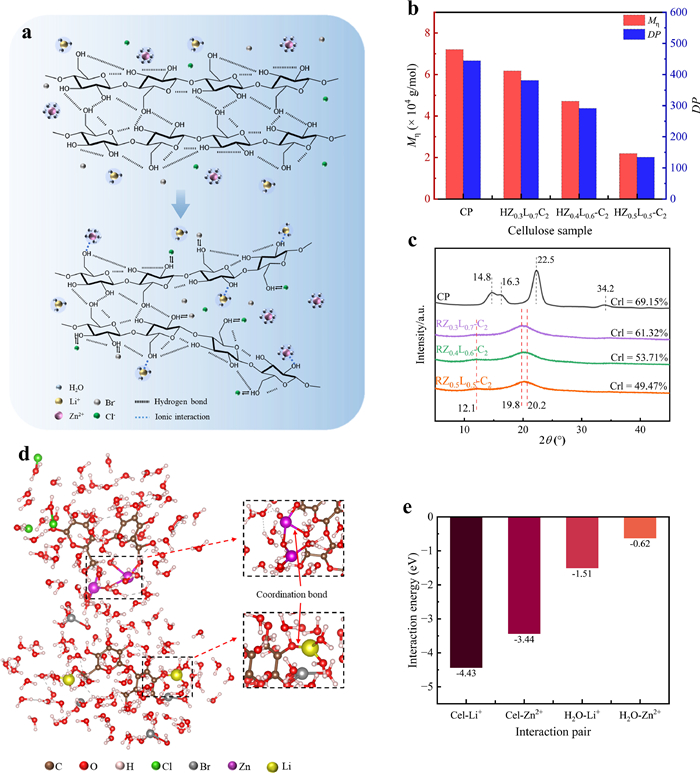
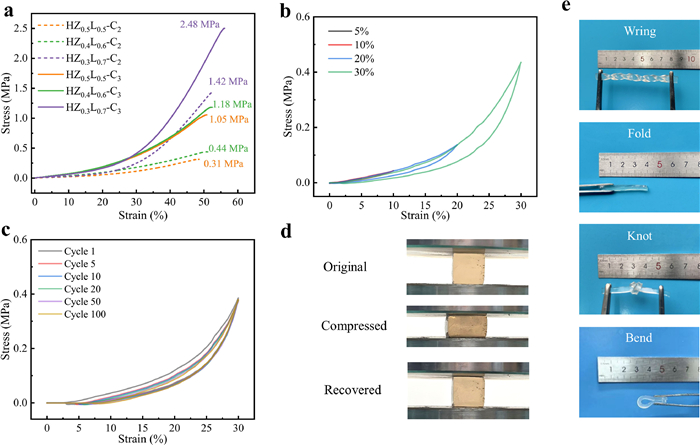
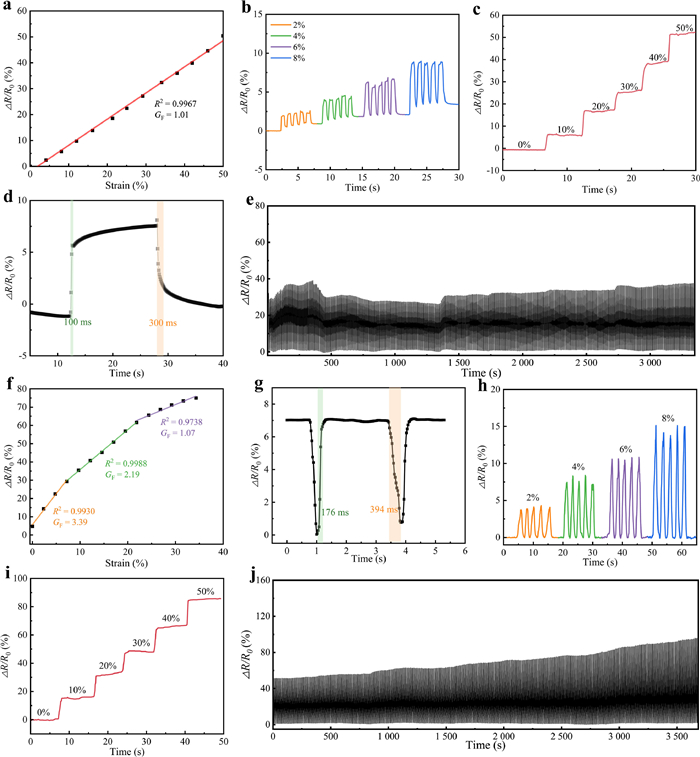
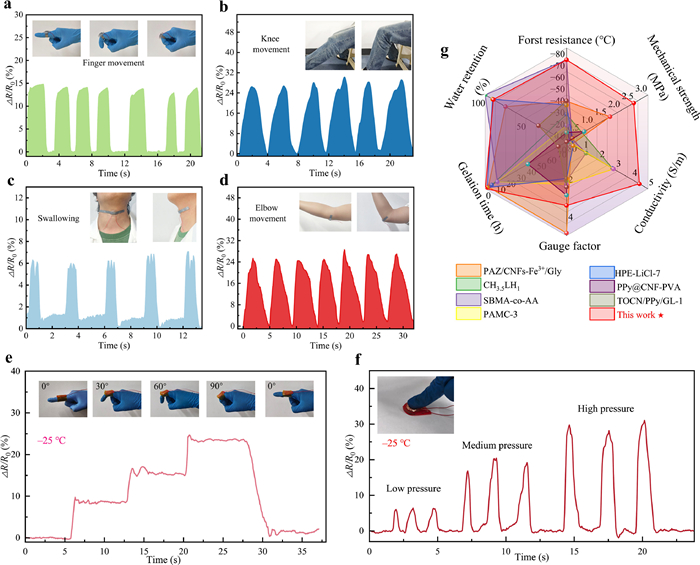
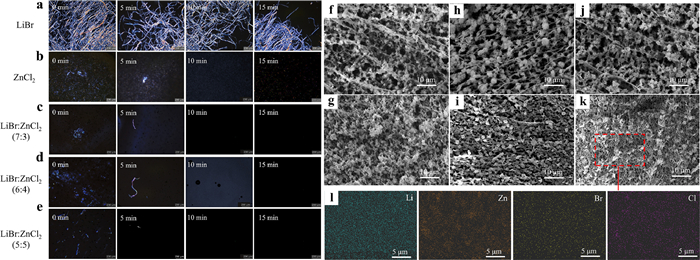
Conductive hydrogel sensors are pivotal for next-generation flexible wearable devices. However, conventional hydrogels suffer from limitations such as insufficient low temperature tolerance, mechanical robustness, and biocompatibility. Herein, a binary molten salt hydrate (MSH) consisting of zinc chloride (ZnCl2) and lithium bromide (LiBr) has been found to efficiently dissolve natural cellulose for synthesis of ionically conductive hydrogel with robust water binding property. The conductive cellulose hydrogel achieved surpassing ionic conductivity of 4.48 S/m, impressive compressive strength of 2.48 MPa, and excellent sensing performance. Molecular simulations disclosed the synergistic effect of lithium and zinc ions in cellulose dissolving and stabilization of the cellulose solution by forming robust water binding performance under low temperatures. Differential scanning calorimetry (DSC) analysis revealed no exothermic peaks associated with water crystallization over the temperature range from −80 to 20 ℃. Furthermore, shear-thinning characteristics of the conductive hydrogel under room temperature make it 3D printable for fabricating customized complex geometries. This work provides a binary molten salt system for facile processing of flexible wearable sensors from cellulose with mechanical robustness, biocompatibility.

|
An, H., Yu, P., Pan, J.X., Ma, J.Z., Li, A.T., Huang, H.B., Jiang, C., Shu, Z., Zhu, Y.Z., Xiang, Y.M., Tan, L., 2024. A self-healing, long-lasting adhesive, lignin-based polyvinyl alcohol organo-hydrogel for strain-sensing applications. Int. J. Biol. Macromol. 279, 135509. doi: 10.1016/j.ijbiomac.2024.135509
|
|
Bai, L.J., Yang, C.L., Sun, X., Yue, D.Q., Wang, W.X., Chen, H., Yang, H.W., Yang, L.X., 2025. Antifreeze proteins and surface-modified cellulose nanocrystals for designing anti-freezing conductive hydrogel sensors. Carbohydr. Polym. 350, 123056. doi: 10.1016/j.carbpol.2024.123056
|
|
Bu, D.Q., Hu, X.Z., Yang, Z.J., Yang, X., Wei, W., Jiang, M., Zhou, Z.W., Zaman, A., 2019. Elucidation of the relationship between intrinsic viscosity and molecular weight of cellulose dissolved in Tetra-N-butyl ammonium hydroxide/dimethyl sulfoxide. Polymers (Basel) 11, 1605. doi: 10.3390/polym11101605
|
|
Cao, Q., Yuan, W.Z., 2024. Photoswitchable eutectogels with ultra-strength, high stretchability and adhesion for information encryption and multifunctional flexible sensor of signal transmission and human–computer interaction. Chem. Eng. J. 494, 153254. doi: 10.1016/j.cej.2024.153254
|
|
Chen, W., Ma, J., Yu, D.H., Li, N., Ji, X.X., 2024. Transparent, super stretchable, freezing-tolerant, self-healing ionic conductive cellulose based eutectogel for multi-functional sensors. Int. J. Biol. Macromol. 266, 131129. doi: 10.1016/j.ijbiomac.2024.131129
|
|
Cheng, Y.P., Zang, J.J., Zhao, X., Wang, H., Hu, Y.C., 2022. Nanocellulose-enhanced organohydrogel with high-strength, conductivity, and anti-freezing properties for wearable strain sensors. Carbohydr. Polym. 277, 118872. doi: 10.1016/j.carbpol.2021.118872
|
|
French, A.D., 2014. Idealized powder diffraction patterns for cellulose polymorphs. Cellulose 21, 885–896. doi: 10.1007/s10570-013-0030-4
|
|
Fu, D., Xing, L.H., Xie, Y., Li, P., Yang, F., Sui, X., Liu, J.Y., Chi, J.L., Huang, B., Shen, J., 2025. Hybrid crosslinking cellulose nanofibers-reinforced zwitterionic poly (ionic liquid) organohydrogel with high-stretchable, anti-freezing, anti-drying as strain sensor application. Carbohydr. Polym. 353, 123253. doi: 10.1016/j.carbpol.2025.123253
|
|
Gao, J.L., Li, X.M., Xu, L.N., Yan, M.Q., Bi, H., Wang, Q.Y., 2024. Transparent multifunctional cellulose-based conductive hydrogel for wearable strain sensors and arrays. Carbohydr. Polym. 329, 121784. doi: 10.1016/j.carbpol.2024.121784
|
|
Ge, W.J., Cao, S., Yang, Y., Rojas, O.J., Wang, X.H., 2021. Nanocellulose/LiCl systems enable conductive and stretchable electrolyte hydrogels with tolerance to dehydration and extreme cold conditions. Chem. Eng. J. 408, 127306. doi: 10.1016/j.cej.2020.127306
|
|
Grimme, S., Antony, J., Ehrlich, S., Krieg, H., 2010. A consistent and accurate ab initio parametrization of density functional dispersion correction (DFT-D) for the 94 elements H-Pu. J. Chem. Phys. 132, 154104. doi: 10.1063/1.3382344
|
|
Han, F., Chen, S.M., Wang, F., Liu, M., Li, J.H., Liu, H., Yang, Y.S., Zhang, H.Q., Liu, D., He, R.Y., Cao, W.T., Qin, X.C., Xu, F., 2025. High-conductivity, self-healing, and adhesive ionic hydrogels for health monitoring and human-machine interactions under extreme cold conditions. Adv. Sci. 12, 2412726. doi: 10.1002/advs.202412726
|
|
He, Q.H., Cheng, Y., Deng, Y.J., Wen, F., Lai, Y.K., Li, H.Q., 2024. Conductive hydrogel for flexible bioelectronic device: current progress and future perspective. Adv. Funct. Mater. 34, 2308974. doi: 10.1002/adfm.202308974
|
|
He, X.J., Obeng, E., Sun, X.S., Kwon, N., Shen, J.L., Yoon, J., 2022. Polydopamine, harness of the antibacterial potentials-a review. Mater. Today Bio. 15, 100329. doi: 10.1016/j.mtbio.2022.100329
|
|
Lara-Serrano, M., Morales-delaRosa, S., Campos-Martín, J.M., Fierro, J.L.G., 2020. High enhancement of the hydrolysis rate of cellulose after pretreatment with inorganic salt hydrates. Green Chem. 22, 3860–3866. doi: 10.1039/D0GC01066A
|
|
Lei, T.D., Pan, J.J., Wang, N., Xia, Z.P., Zhang, Q.S., Fan, J., Tao, L., Shou, W., Gao, Y., 2024. Cold-resistant, highly stretchable ionic conductive hydrogels for intelligent motion recognition in winter sports. Mater. Horiz. 11, 1234–1250. doi: 10.1039/D3MH02013D
|
|
Li, G.S., Gao, Y.J., Sun, C.Y., Niu, F.K., Shi, Z.Q., Yang, Q.L., Xiong, C.X., 2024. An anti-freezing and anti-drying nanocellulose hydrogel for human motion detection. Colloids Surf. A Physicochem. Eng. Aspects 683, 133055. doi: 10.1016/j.colsurfa.2023.133055
|
|
Li, X., Chen, Z.H., Guan, X., Jiang, H.C., Yan, M., Zhang, L.L., Ma, J.X., Wang, L., Wang, Z.G., 2025. Decoding dual-ion synergy in AlCl3/ZnCl2 hydrates: an atomic "interaction–penetration–dispersion" mechanism for ambient cellulose valorization. ACS Nano 19, 20991–21006. doi: 10.1021/acsnano.5c04142
|
|
Li, Y.T., Yin, H., Jiang, C.H., Chen, Y.J., Li, Q.C., Li, B., Guo, Y.P., 2026. Rapid fabrication of antifreezing piezoionic hydrogels for fast charging and enhanced energy harvesting frequency via ion-regulating nanoparticles. Adv. Funct. Mater. 36, e15804. doi: 10.1002/adfm.202515804
|
|
Liu, X.L., Shi, H.Y., Song, F.F., Yang, W.H., Yang, B.W., Ding, D.Y., Liu, Z., Hui, L.F., Zhang, F.S., 2024a. A highly sensitive and anti-freezing conductive strain sensor based on polypyrrole/cellulose nanofiber crosslinked polyvinyl alcohol hydrogel for human motion detection. Int. J. Biol. Macromol. 257, 128800. doi: 10.1016/j.ijbiomac.2023.128800
|
|
Liu, Y.F., Zhou, J.Z., Li, Y.D., Sun, X.H., Wang, Z.Y., Yang, H.Y., Wang, C.Y., 2024b. A cellulose salt gel with mechanical transformation and thermal control. Adv. Funct. Mater. 34, 2400203. doi: 10.1002/adfm.202400203
|
|
Lu, C.Y., Qiu, J.H., Zhao, W., Sakai, E., Zhang, G.H., Nobe, R., Kudo, M., Komiyama, T., 2021. Low-temperature adaptive conductive hydrogel based on ice structuring proteins/CaCl2 anti-freeze system as wearable strain and temperature sensor. Int. J. Biol. Macromol. 188, 534–541. doi: 10.1016/j.ijbiomac.2021.08.060
|
|
Ma, W.L., Li, X., Zhang, L.L., Zheng, Y., Xi, Y., Ma, J.X., Wang, Z.G., 2024. Novel insights on room temperature-induced cellulose dissolution mechanism via ZnCl2 aqueous solution: migration, penetration, interaction, and dispersion. Int. J. Biol. Macromol. 272, 132912. doi: 10.1016/j.ijbiomac.2024.132912
|
|
Ma, W.J., Nie, Y.J., Cao, W.X., Fan, Q.W., Wen, J.L., Zhang, Y.X., Xiong, R.H., Huang, C.B., 2025. Bioinspired, robust wood solar evaporator with scale-like surfaces for efficient solar-driven water purification and thermoelectric generation. Chem. Eng. J. 519, 165196. doi: 10.1016/j.cej.2025.165196
|
|
Meng, L.L., Liu, D., Li, W.H., Ding, S.J., Liu, E., 2025. Nanocellulose-reinforced, anti-freezing, highly conductive ionic organic hydrogels for flexible electronic devices. J. Appl. Polym. Sci. 142, e56464. doi: 10.1002/app.56464
|
|
Miao, H.Y., Liu, Y.Y., Man, Y.Y., Huang, G., Huang, H.L., Fu, X.B., Ge, M., Liu, H.T., Qian, Y., 2023. High-efficiency and recyclable green molten salt hydrate solvent for cellulose hydrogels with high conductivity and freeze tolerance. ACS Sustainable Chem. Eng. 119225–119234.
|
|
Miao, H.Y., Liu, Y.Y., Zheng, C.Y., Huang, X.J., Song, Y.D., Tong, L.L., Dong, C.W., Fu, X.B., Huang, H.L., Ge, M., Liu, H.T., Qian, Y., 2025. A flexible, antifreezing, and long-term stable cellulose ionic conductive hydrogel via one-step preparation for flexible electronic sensors. Carbohydr. Polym. 351, 122936. doi: 10.1016/j.carbpol.2024.122936
|
|
Pan, X.F., Wang, Q.H., Ning, D.W., Dai, L., Liu, K., Ni, Y.H., Chen, L.H., Huang, L.L., 2018. Ultraflexible self-healing guar gum-glycerol hydrogel with injectable, antifreeze, and strain-sensitive properties. ACS Biomater. Sci. Eng. 43397–3404.
|
|
Perdew, J.P., Burke, K., Ernzerhof, M., 1996. Generalized gradient approximation made simple. Phys. Rev. Lett. 77, 3865–3868. doi: 10.1103/PhysRevLett.77.3865
|
|
Pi, M.H., Qin, S.H., Wen, S.H., Wang, Z.S., Wang, X.Y., Li, M., Lu, H.L., Meng, Q.D., Cui, W., Ran, R., 2023. Rapid gelation of tough and anti-swelling hydrogels under mild conditions for underwater communication. Adv. Funct. Mater. 33, 2210188. doi: 10.1002/adfm.202210188
|
|
Salamat, Q., Moradi, R., Nadizadeh, Z., Kavehpour, P., Soylak, M., Asimov, A., Zillur Rahman, M., Kovářík, T., Babuška, V., Deshmukh, K., 2026. Chitosan based smart injectable hydrogels for biomedical applications: a comprehensive review. Bioact. Mater. 55, 703–753.
|
|
Shao, J.H., Zhang, D.Z., Zhang, H., Guo, Y.H., Qi, M.Y., Mao, Y.L., Shi, W.B., 2026. A hydroxyethyl cellulose-enhanced high-adhesion, freeze-resistant hydrogel flexible sensor for robotic posture detection and tactile sensing at low temperatures. Nano Res. 19, 94907822. doi: 10.26599/NR.2025.94907822
|
|
Shi, Y., Wang, R., Bi, S.S., Yang, M., Liu, L.L., Niu, Z.Q., 2023. An anti-freezing hydrogel electrolyte for flexible zinc-ion batteries operating at –70 ℃. Adv. Funct. Mater. 33, 2214546. doi: 10.1002/adfm.202214546
|
|
Sui, X.J., Guo, H.S., Cai, C.C., Li, Q.S., Wen, C.Y., Zhang, X.Y., Wang, X.D., Yang, J., Zhang, L., 2021. Ionic conductive hydrogels with long-lasting antifreezing, water retention and self-regeneration abilities. Chem. Eng. J. 419, 129478. doi: 10.1016/j.cej.2021.129478
|
|
Taheri, N., Abdolmaleki, A., Fashandi, H., 2019. Impact of non-solvent on regeneration of cellulose dissolved in 1-(carboxymethyl)pyridinium chloride ionic liquid. Polym. Int. 68, 1945–1951. doi: 10.1002/pi.5903
|
|
Tong, Q.L., Yi, Z., Ma, L., Tan, Y.F., Cao, X.Y., Liu, D.N., Li, X.D., 2024. Influences of carboxymethyl chitosan upon stabilization and gelation of O/W pickering emulsions in the presence of inorganic salts. Carbohydr. Polym. 331, 121902. doi: 10.1016/j.carbpol.2024.121902
|
|
Wang, J., Qiao, Y., Tian, B.C., Li, H.J., Sun, G.T., Li, J.M., Wang, J.X., 2026. Hydrogel-based hydrated salt composite PCMs for TES in agricultural solar energy utilization facility- solar greenhouse. Renew. Energy 256, 124604. doi: 10.1016/j.renene.2025.124604
|
|
Wang, Y.F., Liu, H.Y., Yu, J.C., Liao, H.J., Yang, L., Ren, E.H., Lin, S.J., Lan, J.W., 2024. Ionic conductive cellulose-based hydrogels with superior long-lasting moisture and antifreezing features for flexible strain sensor applications. Biomacromolecules 25, 838–852. doi: 10.1021/acs.biomac.3c01011
|
|
Wu, S.J., Liu, Z., Gong, C.H., Li, W.J., Xu, S.J., Wen, R., Feng, W., Qiu, Z.M., Yan, Y.R., 2024a. Spider-silk-inspired strong and tough hydrogel fibers with anti-freezing and water retention properties. Nat. Commun. 15, 4441. doi: 10.1038/s41467-024-48745-9
|
|
Wu, W.T., Tian, Y.C., Zhu, Y., Ye, J.H., Miao, M., Feng, X., 2026. Multifunctional triple-network ionic hydrogel sensors engineered by Al/Zn bimetallic salt solution: from cellulose solvent to conductive network architecture. J. Colloid Interface Sci. 702, 138971. doi: 10.1016/j.jcis.2025.138971
|
|
Wu, Y.F., Zhang, X.F., Bai, Y.H., Yu, M.J., Yao, J.F., 2024b. Cellulose-reinforced highly stretchable and adhesive eutectogels as efficient sensors. Int. J. Biol. Macromol. 265, 131115. doi: 10.1016/j.ijbiomac.2024.131115
|
|
Xi, Y., Zhang, L.L., Tian, Y.H., Song, J.L., Ma, J.X., Wang, Z.G., 2022. Rapid dissolution of cellulose in an AlCl3/ZnCl2 aqueous system at room temperature and its versatile adaptability in functional materials. Green Chem. 24, 885–897. doi: 10.1039/D1GC03918K
|
|
Xin, Q., Chu, X.J., Yang, G.Q., Liang, S.Q., Lin, J., 2023. An anti-freezing and conductive glycerol-Mo-based organohydrogel electrolyte for flexible supercapacitor. Ionics (Kiel) 29, 4275–4283. doi: 10.1007/s11581-023-05140-6
|
|
Yang, Y.J., Shin, J.M., Kang, T.H., Kimura, S., Wada, M., Kim, U.J., 2014. Cellulose dissolution in aqueous lithium bromide solutions. Cellulose 21, 1175–1181. doi: 10.1007/s10570-014-0183-9
|
|
Yoon, S., Baek, D., Lim, S., Kim, D.Y., 2026. Cellulose–pectin composite hydrogels fabricated via LiBr solution: a sustainable approach to freeze–thaw and solvent regenerated networks with enhanced structure–function relationships. Compos. Part A Appl. Sci. Manuf. 204, 109650. doi: 10.1016/j.compositesa.2026.109650
|
|
Yu, S., Park, T.H., Jiang, W., Lee, S.W., Kim, E.H., Lee, S., Park, J.E., Park, C., 2023. Soft human–machine interface sensing displays: materials and devices. Adv. Mater. 35, 2204964. doi: 10.1002/adma.202204964
|
|
Zhan, W., Zhang, Q., Zhang, C.L., Yang, Z.H., Peng, N.C., Jiang, Z.D., Liu, M., Zhang, X.H., 2023a. Carboxymethylcellulose reinforced, double-network hydrogel-based strain sensor with superior sensing stability for long-term monitoring. Int. J. Biol. Macromol. 241, 124536. doi: 10.1016/j.ijbiomac.2023.124536
|
|
Zhan, W.Q., Zhang, H.Q., Lyu, X.L., Luo, Z.Z., Yu, Y., Zou, Z.G., 2023b. An ultra-tough and super-stretchable ionogel with multi functions towards flexible iontronics. Sci. China Mater. 66, 1539–1550. doi: 10.1007/s40843-022-2286-5
|
|
Zhang, D., Chen, H., Zhang, Y.X., Yang, J.T., Chen, Q., Wu, J., Liu, Y.L., Zhao, C., Tang, Y.J., Zheng, J., 2025a. Antifreezing hydrogels: from mechanisms and strategies to applications. Chem. Soc. Rev. 54, 5292–5341. doi: 10.1039/D4CS00718B
|
|
Zhang, J.F., Xue, W., Dai, Y.Q., Wu, C., Li, B., Guo, X.Y., Liao, B., Zeng, W., 2023. Ultrasensitive, flexible and dual strain-temperature sensor based on ionic-conductive composite hydrogel for wearable applications. Compos. Part A Appl. Sci. Manuf. 171, 107572. doi: 10.1016/j.compositesa.2023.107572
|
|
Zhang, M.R., Liao, Y., Han, N., Lee, S., Leem, G., Kim, K.H., Pan, X.J., Wie, J.J., Yoo, C.G., 2025b. Upcycling industrial biomass wastes into aerogels using zinc chloride salt hydrates. Adv. Sustain. Syst. 9, 2400688. doi: 10.1002/adsu.202400688
|
|
Zhang, X.Y., Lin, Y., Shen, S.T., Du, Z.H., Lin, Z.Q., Zhou, P.P., Huang, H.L., Lyu, X.L., Zou, Z.G., 2025c. Intrinsic anti-freezing, tough, and transparent hydrogels for smart optical and multi-modal sensing applications. Adv. Mater. 37, 2413856. doi: 10.1002/adma.202413856
|
|
Zhang, X.F., Ma, X.F., Hou, T., Guo, K.C., Yin, J.Y., Wang, Z.G., Shu, L., He, M., Yao, J.F., 2019. Inorganic salts induce thermally reversible and anti-freezing cellulose hydrogels. Angew. Chem. Int. Ed. 58, 7366–7370. doi: 10.1002/anie.201902578
|
|
Zhang, X.Q., Xiao, N.Y., Wang, H.H., Liu, C.F., Pan, X.J., 2018. Preparation and characterization of regenerated cellulose film from a solution in lithium bromide molten salt hydrate. Polymers (Basel) 10, 614. doi: 10.3390/polym10060614
|
|
Zhang, Y.Y., Kobayashi, K., Wada, M., 2025d. Comparative analysis of the structures and properties of cellulose hydrogels prepared using different solvent systems. Cellulose 32, 2337–2351. doi: 10.1007/s10570-025-06437-7
|
|
Zhang, Y.B., Li, T.Y., Miao, L.Y., Kaur, P., Men, S.J., Wang, Q., Gong, X., Fang, Y.L., Zhai, C.C., Zhang, S.X., Zhang, L.Q., Ye, L., 2022. A highly sensitive and ultra-stretchable zwitterionic liquid hydrogel-based sensor as anti-freezing ionic skin. J. Mater. Chem. A 10, 3970–3988. doi: 10.1039/D1TA09769E
|
|
Zhao, J.C., Deng, M.W., Li, S.Y., Guan, Z., Xia, Y.X., Yang, J.H., Lin, X.B., 2022. Room temperature preparation of cellulose nanocrystals with high yield via a new ZnCl2 solvent system. Carbohydr. Polym. 278, 118946. doi: 10.1016/j.carbpol.2021.118946
|
|
Zhong, Y., Liu, M.J., Xiang, C.Y., Lin, Y.Y., Guan, Y.J., Ren, K.Y., Ning, C.Y., Zhou, L., Lu, L.M., Fu, R.M., Tan, G.X., 2024. Polyethylene glycol-based conductive hydrogels with anti-freezing, water retention and self-adhesion for flexible sensors. ACS Appl. Polym. Mater. 283, 611828–611839.
|
|
Zhou, Q., Lu, S.X., Huang, C.J., Puglia, D., Xu, P.W., Niu, D.Y., Yang, W.J., Ma, P.M., 2024. Polyvinyl alcohol/sodium alginate hydrogels with tunable mechanical and conductive properties for flexible sensing applications. Int. J. Biol. Macromol. 283, 137822. doi: 10.1016/j.ijbiomac.2024.137822
|
|
Zhu, J.D., Zhou, S.X., Liu, C., Cai, J.T., Xin, Z., Feng, P.Z., Guo, L.T., He, J., Ding, J., Tao, X.Y., 2025. Double-cross-linking strengthened cellulose nanofibrils/poly(vinyl alcohol) hydrogel electrolyte for all-climate supercapacitors. ACS Appl. Polym. Mater. 7, 14246–14258. doi: 10.1021/acsapm.5c02536
|
Figures(5)

Copyright © 2019 Editorial Office of Journal of Bioresources and Bioproducts
Supported by: Beijing Renhe Information Technology Co. Ltd support: info@rhhz.net




 DownLoad: